

Flat Dies Supplier in Sri Lanka
Introduction
Welcome to Orion Engineering Works, a leading manufacturer based in the heart of India (Punjab), specialising in high-precision pellet dies, press rollers, elevator belts, and buckets. When it comes to pellet mill dies, we pride ourselves on being the best-quality manufacturer in the industry. Orion Engineering Works is dedicated to delivering top-quality components for various industries. With a robust production capacity of over 2800 units annually, we cater to pelleting plants involved in animal feed, minerals, wood products, waste recycling, and beyond.
In many industrial processes, the quality of machinery components plays an important role in maintaining smooth production and consistent output. Flat Dies are essential components used in pellet mills and other material processing equipment. They help shape raw materials into uniform pellets while supporting efficient and continuous production. For businesses looking for a dependable Flat Dies Supplier in Sri Lanka, choosing a reliable manufacturer and supplier is important for achieving better productivity, longer service life, and consistent pellet quality. The demand for reliable and high-quality industrial equipment is increasing across many industries. In pelletizing and material processing applications, flat dies play an important role in producing uniform and consistent pellets.
Orion Engineering Works is a trusted name offering quality engineering solutions for industries that require durable and accurately manufactured components. With a focus on engineering quality, practical designs, and customer requirements, Orion Engineering Works provides Flat Dies suitable for different industrial applications. Orion Engineering Works is a reliable name offering quality flat dies and engineering solutions for industrial applications. With a focus on precision manufacturing, durable materials, and customer requirements, Orion Engineering Works provides solutions designed to support efficient and continuous production.
What Are Flat Dies
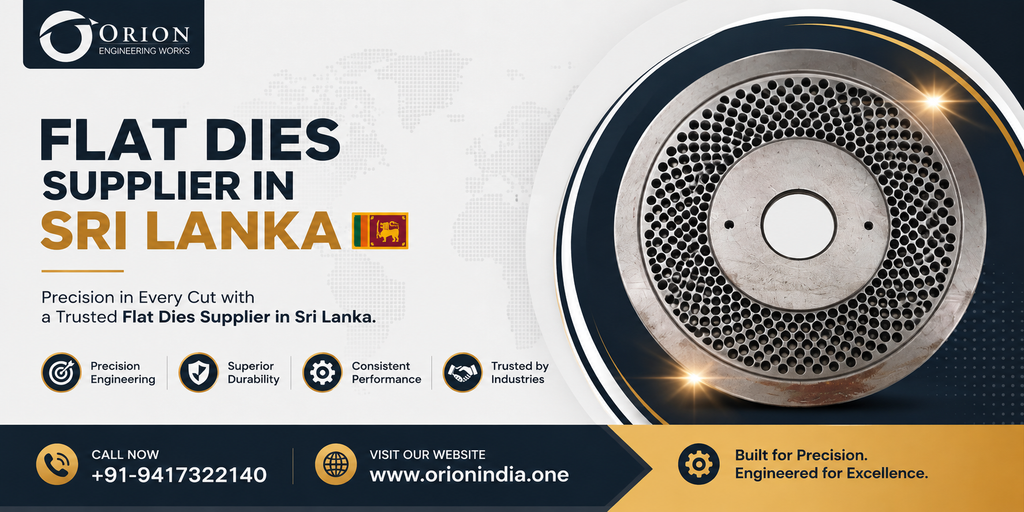
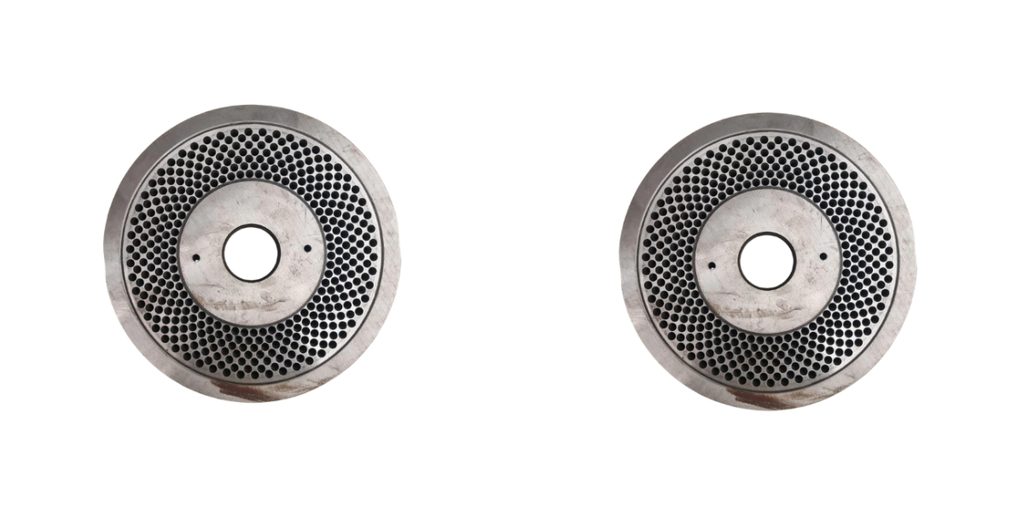
Flat dies are specially designed components used in pellet mills and other pelletizing equipment. They contain accurately machined holes through which processed material is compressed to form pellets. The size and design of the holes can be selected according to the required pellet diameter, material characteristics, and production requirements.
The performance of a pellet mill depends significantly on the quality of its die. A properly manufactured Flat Die can help maintain uniform pellet production, reduce material wastage, and support efficient machine operation. During the pelletizing process, raw material is compressed against the flat die using rollers. The material passes through the die holes under pressure and forms compact pellets. The finished pellets are then cut to the required length.
Importance of High-Quality Flat Dies
A Flat Die operates under pressure, friction, and continuous mechanical load. Therefore, it needs to be manufactured using suitable materials and accurate machining techniques. A flat die works under continuous pressure, friction, and heat. A poorly manufactured die can lead to uneven pellet production, excessive wear, increased downtime, and higher maintenance costs.
- Consistent pellet size and shape
- Better compression performance
- Improved production efficiency
- Reduced material wastage
- Longer operational life
- Reliable machine performance
- Reduced maintenance requirements
For industries operating pellet mills regularly, investing in reliable dies can help reduce unnecessary production interruptions. For this reason, companies searching for a Flat Dies Supplier in Sri Lanka should consider product quality, material selection, machining accuracy, and supplier experience before making a purchasing decision.
Flat Dies Supplier in Sri Lanka for Different Industries
Different industries process different raw materials, so their pelletizing requirements can vary. A professional Flat Dies Supplier in Sri Lanka should understand these requirements and provide suitable solutions according to machine specifications and production conditions. Flat Dies can be used in applications involving materials such as biomass, animal feed, agricultural waste, wood-based materials, and other suitable raw materials.
- Raw material type
- Pellet diameter
- Machine model
- Production capacity
- Compression requirements
- Operating conditions
- Required die thickness and hole configuration
Orion Engineering Works focuses on understanding these requirements before providing suitable engineering solutions. Selecting a reliable Flat Dies Supplier in Sri Lanka is important because the quality of the die directly affects production performance. Poor-quality tooling may result in dimensional inaccuracies, premature wear, frequent replacements, and production interruptions.
Why Choose Orion Engineering Works
High-Quality Flat Dies
- One of the main reasons to choose a reliable Flat Dies Supplier in Sri Lanka is access to high-quality products. Good-quality flat dies are manufactured using durable materials that can withstand continuous pressure, friction, and heat during pellet production. Strong and properly finished dies offer better wear resistance and longer service life.
Precision Manufacturing
- Precision is very important when manufacturing flat dies. Accurate hole diameter, hole arrangement, compression ratio, and die thickness help maintain consistent pellet production. A professional supplier focuses on dimensional accuracy to ensure that the die fits properly with the pellet mill and delivers dependable performance.
Better Pellet Quality
- The quality of the flat die has a direct effect on the final pellets. A properly designed die helps produce pellets with consistent size, shape, and density. This is especially important in animal feed, biomass, wood, and other pellet-producing industries where uniform products are required.
Improved Production Efficiency
- A well-designed flat die allows raw material to pass through the die holes smoothly and efficiently. This can support stable production and reduce unnecessary pressure on the pellet mill. Businesses can benefit from improved productivity and smoother operation when the correct flat die is selected for their application.
Durable and Wear-Resistant Construction
- Flat dies operate under demanding conditions. Continuous friction and pressure can cause wear over time. High-quality dies are designed to provide better resistance against abrasion and mechanical stress. Choosing a reliable supplier helps businesses obtain durable products that can perform consistently for longer periods.
Customized Die Options
- Different materials and pellet applications require different die specifications. A dependable Flat Dies Supplier in Sri Lanka can offer suitable customisation according to machine requirements. Customers may require different hole diameters, thicknesses, compression ratios, hole patterns, or dimensions depending on their production needs.
Compatibility With Pellet Mills
- Using the correct flat die is essential for proper pellet mill operation. A professional supplier can help customers select dies according to their machine model and production requirements. Proper compatibility ensures better fitting, smoother operation, and reduced chances of machine-related problems.
Reduced Maintenance Requirements
- A quality flat die can help reduce frequent replacement and maintenance. Durable construction and accurate manufacturing minimize unnecessary wear and improve operational stability. This can help businesses spend less time dealing with component-related issues and more time maintaining regular production.
Cost-Effective Solution
- Price is important, but the cheapest flat die is not always the most economical choice. A low-quality die may wear quickly and require frequent replacement. A durable and accurately manufactured flat die can provide better value over its working life by reducing replacement frequency, downtime, and maintenance expenses.
Reliable Technical Support
- A good supplier does more than simply provide products. Technical guidance can help customers choose the appropriate die specifications for their machines and materials. Proper assistance can make installation, replacement, and operation easier while helping customers achieve better results.
Consistent Performance
- Consistency is essential for industrial production. A properly manufactured flat die can provide stable pellet formation throughout the production process. Consistent performance helps businesses maintain product quality and meet regular production requirements.
Dependable Long-Term Performance
- Selecting a reliable Flat Dies Supplier in Sri Lanka means investing in a component that can support stable and efficient pellet production over the long term. With quality materials, precise manufacturing, suitable heat treatment, customisation options, and dependable technical support, the right supplier can help improve machine reliability and reduce production interruptions.
Applications of Flat Dies
1. Feed and Pellet Manufacturing
- Flat dies are widely used in feed pellet machines for producing animal feed, poultry feed, fish feed, and other agricultural pellets. The die controls the size and shape of pellets while helping maintain consistent production quality. High-quality flat dies can improve production efficiency and reduce unnecessary downtime.
2. Biomass Pellet Production
- Flat dies are also used in biomass pelletizing equipment for processing materials such as sawdust, wood chips, agricultural residues, rice husks, and other biomass materials. They help compress raw materials into uniform pellets that are easier to handle, store, and transport.
3. Animal Feed Industry
- In the animal feed industry, flat dies are used to manufacture compact and uniform feed pellets. They are suitable for different formulations and help manufacturers achieve consistent pellet dimensions. Properly designed dies also contribute to stable machine performance and reliable production.
4. Poultry Feed Manufacturing
- Poultry feed manufacturers use flat dies in pellet mills to produce feed pellets with controlled dimensions. The dies help provide consistent compression and shape, making them useful for large-scale poultry feed production.
5. Fish Feed Production
- Flat dies are used in fish feed pelletizing machines to produce properly sized pellets for different types of fish. Accurate die holes help maintain consistent pellet size and improve the overall quality of the finished feed.
6. Agricultural Waste Processing
- Agricultural by-products such as straw, husk, corn stalks, and other plant residues can be compressed using pelletizing machines equipped with flat dies. This application helps convert agricultural waste into useful fuel pellets or feed-related products.
7. Wood Pellet Manufacturing
- Flat dies are suitable for small- and medium-scale wood pellet production. They compress prepared wood material into cylindrical pellets used as biomass fuel. Durable dies are particularly important where continuous production and high compression are required.
8. Fertiliser Pelletizing
- Flat dies can be used in certain fertiliser pelletizing and granulation processes where raw materials need to be compressed into consistent forms. They support controlled pellet dimensions and efficient material processing.
9. Industrial Pellet Production
- Various industries use pelletizing equipment to convert powdered, granular, or fibrous materials into compact pellets. Flat dies provide the required forming surface and can be manufactured according to specific machine and production requirements.
10. Recycling and Waste Management
- Flat dies are useful in selected recycling and waste-processing applications where suitable waste materials are compressed into compact pellets or briquettes. This can make materials easier to store, transport, and reuse.
11. Chemical and Mineral Processing
- In specialised applications, flat dies can be used for processing certain chemical, mineral, and industrial compounds that require controlled compression and forming. The material and design of the die can be selected according to the operating conditions.
Specification Table of Flat Dies
| Parameter | Specification |
|---|---|
| Product Type | Alloy Steel / Tool Steel |
| Material | Flat Dies |
| Hardness | 50–60 HRC |
| Surface Finish | Ground / Polished |
| Die Shape | Flat |
| Manufacturing Process | CNC Machined |
| Size | Customizable |
| Thickness | As per Application |
| Tolerance | Precision Tolerance |
| Application | Thread Rolling / Forming |
| Customization | Available |
| Country of Origin | India |
Benefits of Flat Dies
1. High-Quality Flat Dies
- One of the main benefits of purchasing flat dies from a reliable supplier is consistent product quality. Good-quality flat dies are manufactured using suitable materials and precise machining processes. They are designed to withstand continuous production operations while maintaining their shape and dimensional accuracy. High-quality dies can help manufacturers achieve better production results and reduce problems caused by premature wear or deformation.
2. Excellent Dimensional Accuracy
- Precision is very important when using dies for industrial production. A professional Flat Dies Supplier in Sri Lanka can provide dies manufactured according to accurate dimensions and customer requirements. Proper dimensional accuracy helps ensure that the final products have consistent size and shape. This is especially useful in applications where even small variations can affect product performance or assembly.
3. Better Production Efficiency
- Efficient dies can support faster and smoother production operations. When a flat die is properly designed for a particular application, it allows material to pass through the required forming or processing area more consistently. This can help reduce production interruptions and improve overall manufacturing efficiency. Companies can produce more components in less time while maintaining the required quality standards.
4. Durable Construction
- Industrial dies often operate under pressure, friction, heat, and repeated production cycles. Therefore, durability is an important factor when selecting flat dies. A trusted supplier focuses on using suitable die materials and manufacturing methods to provide strong and long-lasting products. Durable flat dies can withstand regular use and reduce the need for frequent replacement.
5. Reduced Maintenance Requirements
- Poor-quality dies may require frequent maintenance, adjustments, or replacement. This can increase production downtime and operating expenses. High-quality flat dies are designed for reliable performance and better resistance to wear. As a result, they can reduce maintenance requirements and help keep production equipment operating smoothly for longer periods.
6. Consistent Product Quality
- Manufacturing consistency is another major advantage of using properly manufactured flat dies. A precision-made die helps maintain uniform processing conditions throughout production. This allows manufacturers to produce products with consistent dimensions and finish. Consistent production quality can also reduce rejected products and material wastage.
7. Customised Die Solutions
- Different industries may have different die requirements. A professional Flat Dies Supplier in Sri Lanka can offer customised solutions based on specific production requirements. Custom flat dies can be designed according to factors such as dimensions, material, application, production volume, and machine specifications. This makes them suitable for specialised manufacturing applications where standard dies may not provide the desired results.
8. Better Material Utilisation
- Precision-designed dies can help manufacturers process materials more efficiently. Proper die design can improve material flow and reduce unnecessary material loss during production. Better material utilisation can be particularly beneficial for businesses looking to control manufacturing costs and improve overall production efficiency.
9. Improved Surface Finish
- The quality and precision of a die can influence the surface finish of the manufactured product. Properly finished flat dies can provide smoother and more uniform processing. A good surface finish can improve the appearance and functional performance of the final product while reducing the need for additional finishing operations.
10. Cost-Effective in the Long Run
- Although the initial price of a high-quality flat die may vary depending on its design and material, investing in a reliable product can provide better long-term value. Durable dies can last longer, require less maintenance, and reduce production interruptions. These benefits can help manufacturers lower replacement and maintenance costs over time.
Types of Flat Dies
1. Cutting Flat Dies
- Cutting flat dies are designed to cut materials into specific shapes and sizes. They are commonly used in manufacturing processes where clean and repeatable cuts are required. These dies can be designed according to the thickness, shape, and material of the product. Properly manufactured cutting dies help reduce material wastage and maintain dimensional consistency.
2. Forming Flat Dies
- Forming flat dies are used to change the shape of a material without necessarily removing material from it. They are suitable for applications where a particular profile, bend, or form needs to be produced repeatedly. The die design depends on the material characteristics and the desired finished shape.
3. Pressing Flat Dies
- Pressing flat dies are used with pressing equipment to apply controlled force to a workpiece. They can be used for different industrial forming and compression applications. A strong and accurately manufactured pressing die can withstand repeated operating cycles while maintaining its working dimensions.
4. Punching Flat Dies
- Punching flat dies are used for producing holes, openings, or specific cut-out shapes in different materials. They are commonly paired with suitable punches in industrial machinery. Precision is especially important for punching applications because even small dimensional differences can affect the final product.
5. Embossing Flat Dies
- Embossing flat dies are designed to create raised or recessed patterns, markings, logos, or designs on suitable materials. They are used where surface identification or decorative patterns are required. The die surface needs to be accurately manufactured to achieve clear and consistent results.
Conclusion
Flat Dies are important components in pelletizing equipment, and their quality directly influences production consistency and machine performance. Choosing the right Flat Dies Supplier in Sri Lanka can help industries achieve reliable operation, better pellet quality, and reduced maintenance concerns.
Orion Engineering Works provides dependable engineering solutions with a focus on quality, precision, durability, and customer requirements. With suitable Flat Dies and professional engineering support, businesses can improve the performance and reliability of their pelletizing operations.